Identify the Unknown Peak — and Prove Where It Came From
Unknown impurity identification, degradant characterization, and extractables & leachables analysis by LC-MS/MS and high-resolution mass spectrometry. Full structure elucidation and root-cause investigation to keep your submissions and batches moving.

When an Unknown Impurity Stops Everything
A single unidentified peak above the reporting threshold can hold a batch, delay a submission, or trigger a regulatory query. These are the situations that bring pharmaceutical and CRO teams to HIPSOUL.
An Unknown Peak You Can't Release Around
An unidentified impurity above the ICH reporting or identification threshold cannot simply be ignored — it blocks batch release and demands structural characterization before product can move.
A Regulatory Query You Must Answer
Agencies increasingly require identification and qualification of impurities and degradants. An unanswered deficiency letter stalls approval until the structure and source are established.
Degradants Appearing on Stability
New peaks emerging during stability studies must be identified and tracked to demonstrate that your stability-indicating method and shelf-life claim remain valid.
No Explanation for Where It Came From
Identifying the structure is only half the answer. Without root-cause investigation — process-related, degradation, or contaminant — you cannot implement a defensible CAPA.
Unknown Extractables & Leachables
Container-closure and single-use systems can introduce leachables that threaten patient safety and regulatory acceptance, requiring sensitive identification at trace levels.
No In-House HRMS or Interpretation Capacity
Structure elucidation demands high-resolution mass spectrometry and experienced spectral interpretation that many QC labs and smaller CROs simply don't have access to.
From Unknown Peak to Confirmed Structure
HIPSOUL combines LC-MS/MS, high-resolution mass spectrometry, and structured degradation science to identify impurities, characterize their structure, and trace their origin — under one quality system, with submission-ready documentation.
Unknown Impurity Identification
Isolation, detection, and structural identification of unknown peaks above reporting and identification thresholds, with confidence-rated structure proposals.
Related Substances Characterization
Identification and characterization of process-related and synthesis-related impurities to support specification setting and regulatory filings.
Degradation Product Identification
Characterization of degradants arising from forced degradation and stability studies, with degradation pathway mapping for your API or formulation.
Extractables & Leachables Analysis
Identification of extractables and leachables from container-closure and single-use systems at trace levels, supporting safety and compatibility assessment.
High-Resolution Mass Spectrometry
Accurate-mass HRMS for molecular formula determination and confident elemental composition assignment — the foundation of credible structure elucidation.
Structure Elucidation Support
MS/MS fragmentation interpretation and, where required, orthogonal data integration to propose and confirm impurity structures.
Forced Degradation Studies
Structured stress studies (acid, base, oxidative, thermal, photolytic) to generate, identify, and map degradants per ICH Q1A and method validation needs.
Process Impurity & Root-Cause Investigation
Investigation linking an identified impurity to its source — starting material, intermediate, reagent, or degradation — to support CAPA and QC decisions.
A Defensible Path from Unknown to Identified
Impurity identification at HIPSOUL is a structured investigation, not guesswork. Each stage produces traceable evidence, so your final report withstands regulatory and QC scrutiny.
Case Intake & Scoping
We review your chromatogram, method, threshold context, and regulatory driver, then define the identification scope and confidence target. NDA signed before any disclosure.
Isolation & Detection
The target impurity is detected, and where needed isolated or enriched, so it can be characterized cleanly without matrix interference.
Accurate-Mass & Fragmentation
HRMS establishes molecular formula; MS/MS fragmentation maps the structural building blocks of the unknown.
Structure Elucidation & Confirmation
Fragmentation and orthogonal data are interpreted to propose — and where possible confirm — the impurity structure with a stated confidence level.
Root-Cause & Reporting
The identified impurity is traced to its likely origin, and a signed, submission-ready report with full supporting data is delivered securely.

Instruments Built for Structure-Level Answers
Impurity identification depends on accurate mass, clean fragmentation, and the ability to isolate trace-level unknowns. Our laboratory runs a qualified high-resolution mass spectrometry and chromatography fleet under IQ/OQ/PQ qualification and 21 CFR Part 11-compliant data management.
- High-Resolution Accurate-Mass (HRMS) Spectrometry for Molecular Formula Determination
- Triple Quadrupole LC-MS/MS (ESI/APCI) for Targeted & Fragmentation Analysis
- GC-MS / Headspace for Volatile Impurities & Solvent-Related Unknowns
- Waters ACQUITY UPLC & Agilent 1260/1290 HPLC with PDA/DAD for Peak Detection
- Preparative & Semi-Preparative Isolation for Trace Impurity Enrichment
- Validated Stability Chambers (ICH Zones I–IV) for Forced Degradation
- 21 CFR Part 11-Compliant Data Systems with Full Audit Trail
Impurity Identification for Your Sector
Every regulated sector faces unknown peaks. Our identification approach is tailored to the regulatory drivers and matrices that matter to you.
Impurity Identification in Action
Real identification projects, measurable outcomes — unknowns resolved, root causes found, submissions unblocked.
 Pharmaceutical
Unknown Degradant Identified to Resolve a Regulatory Query
A pharmaceutical client received a deficiency letter on an unidentified degradant above the ICH identification threshold. HIPSOUL used HRMS and MS/MS fragmentation to elucidate the structure and map its degradation pathway, supporting a complete agency response.
 API Manufacturing
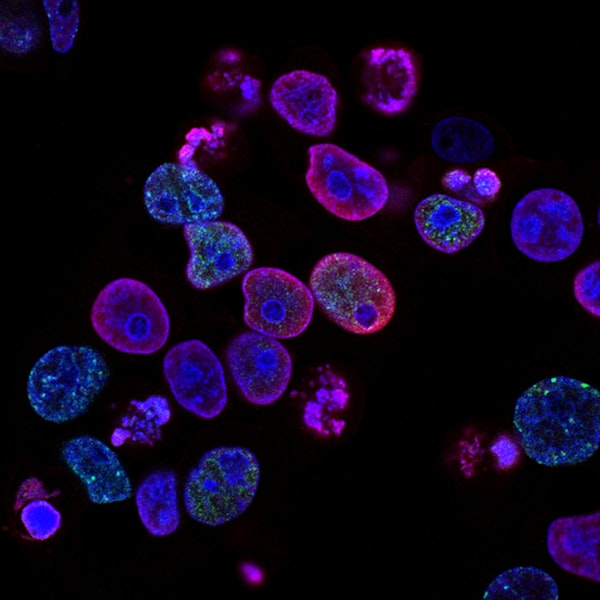
Process Impurity Traced to a Starting Material
An API manufacturer faced a recurring process-related impurity at the specification limit. HIPSOUL identified the structure and traced its origin to a starting-material residue, enabling a targeted process correction and CAPA.
 Biotechnology
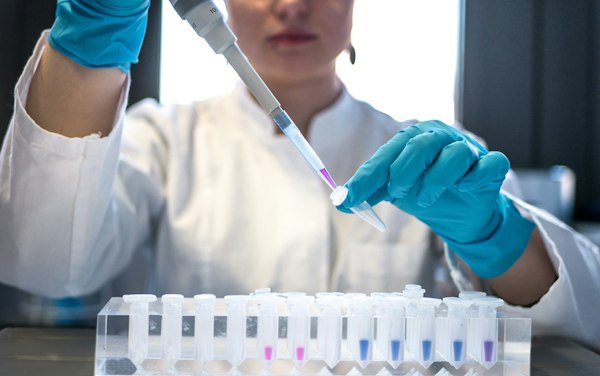
Leachable Identified in a Single-Use System
A biotech client needed trace leachables from a single-use container identified for a safety assessment. HIPSOUL detected and characterized the leachable at trace level, supporting the container-closure compatibility dossier.
Frequently Asked Questions
Answers to the questions quality, regulatory, and research teams ask most before starting a HIPSOUL impurity identification project.
What does impurity identification actually involve?
It is a structured investigation: detecting and where needed isolating the unknown peak, determining its molecular formula by high-resolution accurate-mass MS, interpreting MS/MS fragmentation to elucidate structure, and tracing the impurity to its likely origin. You receive a signed, submission-ready report with all supporting data.
Can you identify an unknown impurity above the ICH threshold for our submission?
Yes. Identifying and characterizing impurities above ICH Q3A/B reporting and identification thresholds is our core service. We provide structure elucidation with a stated confidence level and documentation formatted for regulatory submission.
Do you perform forced degradation to characterize degradants?
Yes. We run structured forced degradation studies (acid, base, oxidative, thermal, photolytic), then identify the resulting degradants and map degradation pathways — supporting both stability-indicating method validation and degradant qualification.
Can you trace an impurity back to its root cause?
Yes. Identification is paired with root-cause investigation to distinguish process-related impurities, degradation products, and contaminants, and to link the impurity to a starting material, intermediate, reagent, or degradation route — supporting your CAPA.
Do you handle extractables and leachables identification?
Yes. We identify extractables and leachables from container-closure and single-use systems at trace levels, supporting compatibility and safety assessments for your dossier.
How fast can you turn around an unknown impurity identification?
Many unknowns are taken from detection to confirmed structure in under two weeks. Complex structures, isolation requirements, or multi-impurity investigations take longer. Timelines are confirmed in your project quotation.
Do you sign NDAs and protect confidential structures?
Yes. We sign mutual NDAs before any technical discussion. Novel APIs, proprietary structures, and unpublished impurity data are held in strict confidence and never disclosed to third parties.
Do you accept international projects and samples?
Yes. We work with clients across the USA, Europe, India, Australia, and the Middle East, and advise on import/export documentation for APIs and regulated materials.
Have an unknown peak you need identified?
Talk to an ExpertRequest a Quote for Your Impurity Identification Project
No-obligation quote within 24–48 hours. NDA signed before any technical discussion. Trusted by pharmaceutical, API, biotech, CRO, and research clients across the USA, Europe, India, Australia, and the Middle East.
Strict confidentiality & NDA on all projects · ICH-aligned documentation · Quote within 24–48 hours